
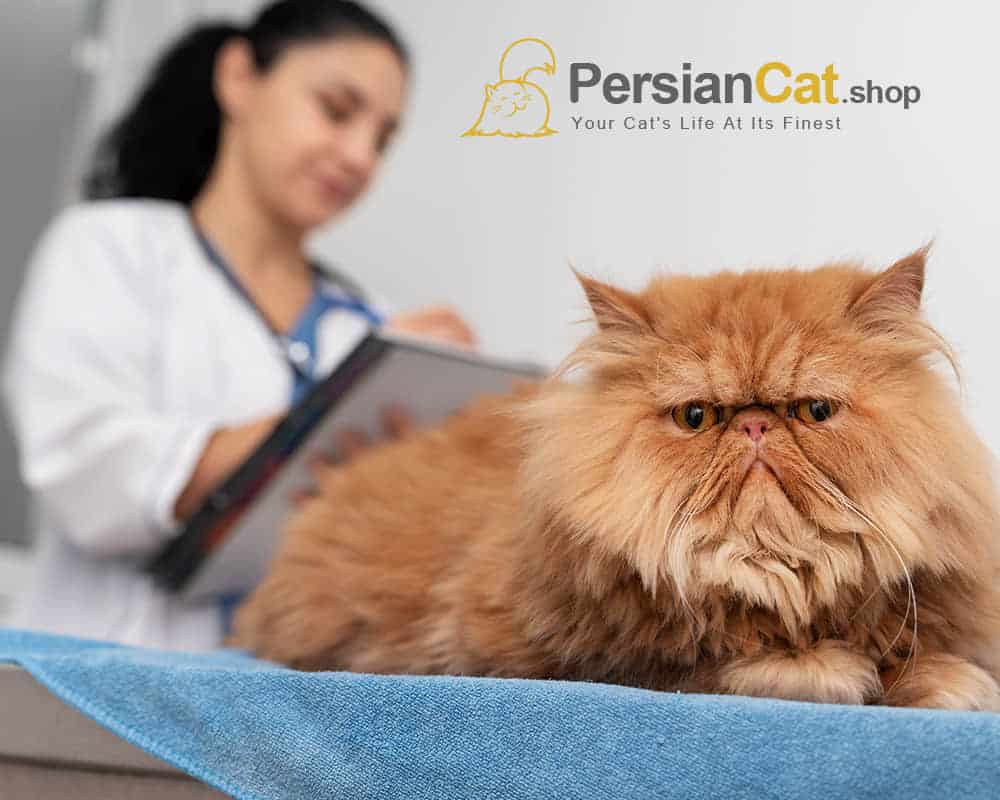
Your Persian cat is quite unique as he is one of the oldest and most popular cat breeds in the world. Therefore, due to his specific physical features, he has some common health issues you should be aware of when you purchase your Persian cat. That knowledge will potentially save money on expensive veterinary bills.
- Kidney disease
- Eyes discharge
- Obesity leading to major medical conditions
- Brachycephalic nose syndrome causing breathing issues
- Skin condition
Keep in mind that Persian cats have a shorter lifespan than most cats. By being aware of those common symptoms, you can keep your furry baby healthy and happy by learning how to prevent and manage those issues.
How to prevent kidney disease?
About 50% of Persian cats are prone to Polycystic kidney disease, causing cysts in their kidneys. Make sure you feed them with a low sodium diet. Always ask the advice of your veterinarian about the proper diet for your Persian.
You must encourage them to drink a lot of water by providing them with the best cat water fountain, fitted to their flat face, as Persian cats like to drink from fresh, clean, filtered running water. You can find on our website the best appropriate fountain they will enjoy drinking from. In case you believe they do not drink enough and your furry baby becomes lethargic, be proactive and visit their veterinarian. Because if left untreated, Polycystic kidney disease can progress rapidly and result in kidney failure, especially on older Persian cats. The veterinarian will perform an ultrasound to check on the health of their kidneys.
How to take care of eye discharge?
Due to their flat face and narrow airways, your Persian cat will more than likely experience watery discharge from their eyes. It is actually called congenital epiphora and it is hereditary to this specific breed. The nasolacrimal duct drainage is not functioning properly and causes tears that oxidates hairs around their eyelids. The best way to help your furry baby is to use a small plastic comb to eliminate the very dry part and then rub a soft cotton cloth with warm water to clean the outside part around their eyes. You can also use a specific cleansing lotion bought at your veterinarian place.
How to prevent obesity leading to major medical conditions?
Being indoors cats, Persian cats if they are not stimulated, tend to be lazy and lethargic. It is absolutely critical to provide your furry baby with toys, such as puzzle toy, feather cat toy, electronic cat toy, cat trees, and cat stairs.
Having a narrow airway, this breed tends to have respiratory issues that could cause hypertrophic cardiomyopathy and diabete, especially when they get older. As you can see, it is essential to prevent these very critical medical diseases. So it is best to avoid at all costs your baby becoming obese or slightly overweight.
Many remedies are as easy as establishing a regular exercise routine between you and your Persian cat. Daily physical activity will help prevent your baby gaining weight. Once in a while, check their weight for an overall health status.
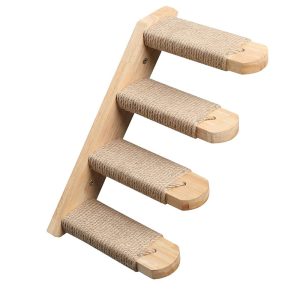
Whenever you are home, it is up to you to motivate them with cat toys. You could use a cat wand that features feather toys containing little bells. Your baby will enjoy chasing it back and forth, jumping to catch its prey. Whenever you are away at work, some very stimulating toys will keep your baby active and entertained. Wall-mounted cat beds are a great way to encourage them to climb and keep their hips in good health. Hip dysplasia is a well-known genetic trait for Persian cats. It is actually a malformation of the hip joint and if left untreated could cause arthritis.
An entertaining laser cat toy will keep your Persian cat active and stimulate its natural hunting instinct. Their breed makes them indoor cats. So it is quite important to provide them a way to exercise. This laser will soon become the perfect toy and playful companion for your furry baby.
Puzzle cat is another option.
An entertaining wooden box is the perfect interactive indoor toy to mentally and physically stimulate your Persian cat. Your cat will love to chase and play with the sisal balls through the multiple access points. The perfect maze with so many labyrinths will keep your cat on its toes. Cats’ natural instinct is about hunting, chasing, until they can get their prey.
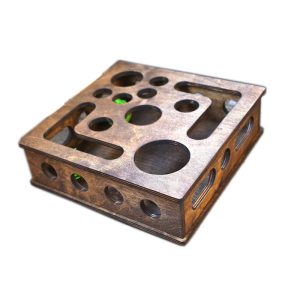
A puzzle cat box provides infinite combinations to keep your Persian cat from boredom while staying active and healthy. It is the best indoor toy as it allows your cat to hunt and get the ball out of the box, which is not possible with other products. The large and various size holes will provide more excitement to your cat and satisfy its hunting needs. Your baby will stay engaged and entertained with this toy for longer than other toys.
For optimal overall health, 30 minutes daily of exercise is ideal.
What is Brachycephalic nose syndrome and how to treat it?
The Persian cat is known as the Brachycephalic breed, which literally means “short head” and a flat face compared to other domestic cats. Their morphology is really unique but unfortunately is a cause for respiratory syndrome.
Their small nostrils and narrow airways cause an obstruction in the ability to breath, chronic respiratory infections, sometimes sleep apnea and snoring. When the condition is quite serious, some can die at an early age due to heat stroke or heart attack.
The degree of this genetic disorder varies from one Persian to another.
If you notice that your furry baby is seriously affected by this Brachycephalic syndrome, visit your veterinarian as surgery may be an option to correct airways and the nostrils can be enlarged.
How to prevent skin condition?
Persian cats are prone to skin condition due to their thick and long luxurious hair. As they are not able to reach the bottom part of their coat, without regular grooming, they tend to develop knots around their ears, legs, belly and collar. Avoid any painful skin irritation by grooming them twice to three times a week to get rid of the matting.
Their long hair tends to develop grease, dirt and dead skin flakes into the deeper coat. This could become a serious issue of skin infection if you do not regularly brush and do proper grooming.
If you ever witness any abnormal infection, redness or any minor issues on their skin, visit your veterinarian as it could be the very beginning sign of serious skin disease.